
Boards & Modulinomain board
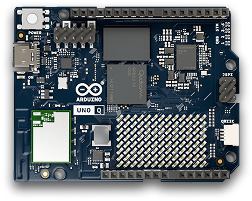
Arduino UNO Q
The main board of the day. Runs your game logic and the AI models you train with Edge Impulse via Arduino App Lab. Connects to your laptop with a USB-C cable for power and programming.
> docs ↗
The main board of the day. Runs your game logic and the AI models you train with Edge Impulse via Arduino App Lab. Connects to your laptop with a USB-C cable for power and programming.
> docs ↗
6-axis IMU (accelerometer + gyroscope). Detects tilt, shake and motion — perfect for gesture wands.
> docs ↗
2-axis thumb joystick with push button. Classic arcade controls.
> docs ↗
3 push buttons with LEDs. Quick inputs with visual feedback.
> docs ↗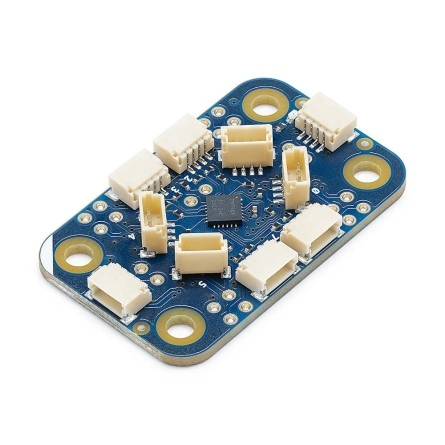
5 hubs to chain multiple Modulinos together and connect them to the board via Qwiic.
> docs ↗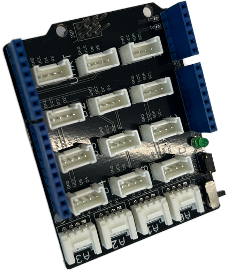
Plugs onto the Arduino and gives you standardized analog, digital and serial Grove ports — connect and swap sensors without soldering.
> docs ↗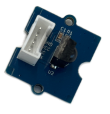
Picks up 38 kHz modulated infrared signals, like from a TV remote. Range up to 10 m. Pair it with the IR Emitter.
> docs ↗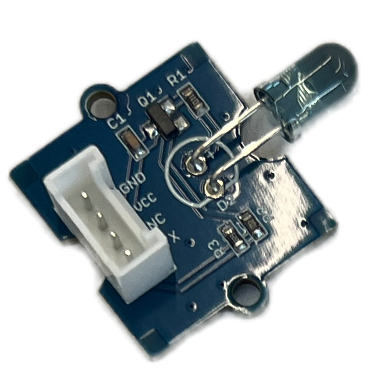
Sends commands over infrared light — emulate a remote control and talk to the IR Receiver. Range ~10 m.
> docs ↗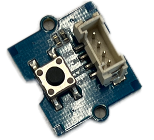
Push button with built-in pull-down. Pressed = HIGH. The simplest input for your game.
> docs ↗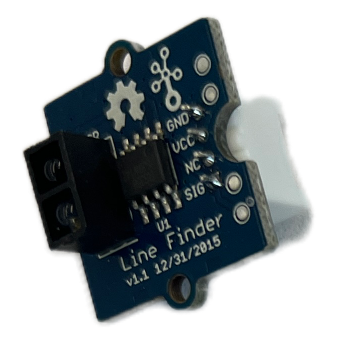
IR LED + phototransistor detect light vs. dark surfaces at 0.1–5.5 cm. Built for line-following robots.
> docs ↗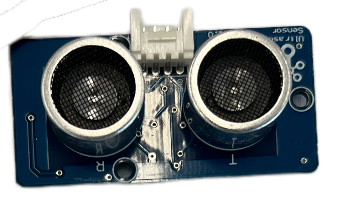
Measures distance contact-free via sound echo. Range 3 cm – 4 m at 1 cm resolution.
> docs ↗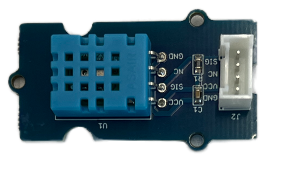
Measures air humidity (capacitive) and temperature (NTC). Works above 0 °C only.
> docs ↗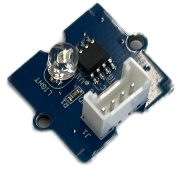
Outputs an analog voltage proportional to ambient brightness. Great for light-based triggers.
> docs ↗
GND, VCC + 2 free channels with screw clamps (30–20 AWG). Bring loose wires or custom parts into the Grove system.
> docs ↗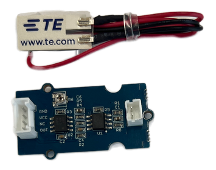
Detects shocks, knocks and touches — bending the piezo creates a voltage. Perfect for knock detection.
> docs ↗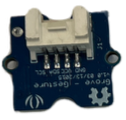
PAJ7620U2 chip recognizes swipes up/down/left/right plus proximity. Touch-free control.
> docs ↗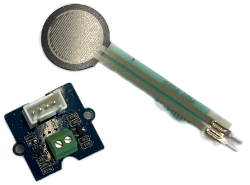
Force-sensitive resistor: more pressure, less resistance. Pressure-based inputs and controllers.
> docs ↗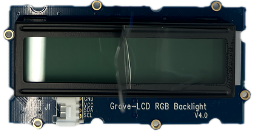
16×2 character display with any backlight color and custom characters. Runs on 3.3 / 5 V.
> docs ↗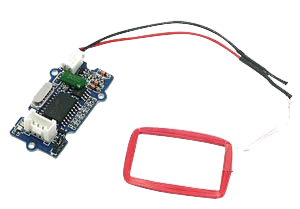
Reads RFID cards and tags contact-free up to ~7 cm. Includes a chip. Output via UART or Wiegand.
> docs ↗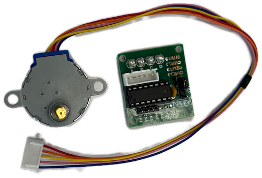
Rotates in precise, equal steps — ideal for exact positioning like in 3D printers. Controlled through the motor driver.
> docs ↗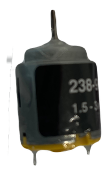
Spins as long as it has power. Control it via motor driver or relay. Classic drive for wheels, rollers and fans.
> docs ↗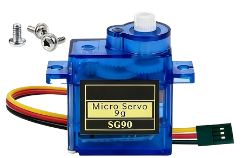
Set an angle, it moves there and holds it. Great for steering, joints and flaps. Comes with accessories.
> docs ↗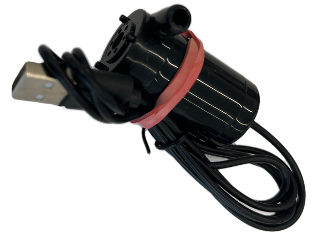
Small water pump powered via USB. Use a motor driver to switch it from code.
> docs ↗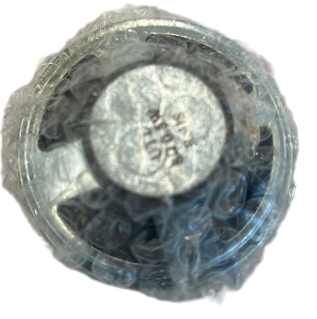
Play tones, melodies and sound effects — instant audio feedback for your game. Cable not included.
> docs ↗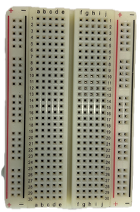
Solder-free prototyping: push parts and wires into the grid, internal rails connect them.
> docs ↗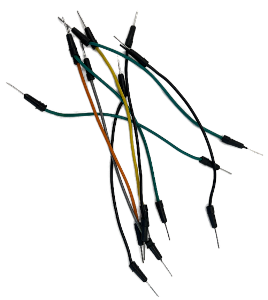
Male-to-male wires to connect breadboard, Arduino and sensors quickly.
> docs ↗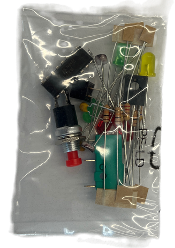
Limit current, e.g. in front of LEDs, or build voltage dividers. In the clear and red sets.
> docs ↗Small lights for status and effects — always use a resistor in series. 2 in the clear set, 4 in the red set.
> docs ↗Bare tactile button for the breadboard — needs a pull-down or INPUT_PULLUP. In the clear and red sets.
> docs ↗Light-dependent resistor: resistance drops with more light. Read it through a voltage divider. Clear set.
> docs ↗Mechanical limit switch that closes when something hits it — detect end positions. Clear set.
> docs ↗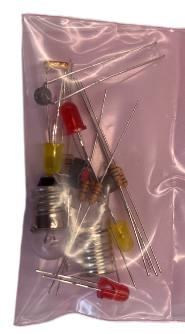
2 small incandescent bulbs. Draw more current than LEDs — switch them via a transistor. Red set.
> docs ↗Temperature-dependent sensor read as an analog value — react to warmth or breath. Red set.
> docs ↗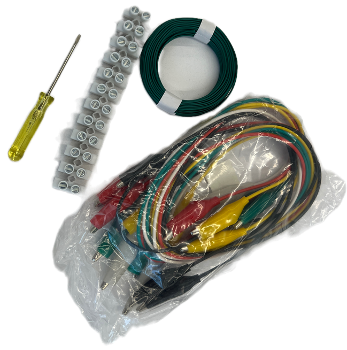
Small screwdriver for terminal blocks and the Grove screw terminal. Green set.
> docs ↗with EDGE IMPULSE
Teach your game new inputs.
01
collect
Record your input 20–50× per class: "circle", "slash", "idle".